
• Skip to primary navigation
  • Skip to main content
  • Skip to primary sidebar
  • Skip to footer
Children's Therapy Connection

Children's Therapy Connection

Quality, comprehensive and family-centered pediatric therapy services

Menu
  • Why CTC?
    Close
      • About Us
        • Close
        • Children’s Therapy Connection (CTC) is a family-owned First Steps agency and pediatric therapy provider serving central Indiana families since 2007. We focus on the concerns and goals expressed by your family, seeking to provide innovative and constructive therapy interventions that are age-appropriate and tailored to your child’s needs. Read more
      • First Steps Services
        • Close
        • Children’s Therapy Connection (CTC) is a family-owned First Steps agency and pediatric therapy provider serving central Indiana families since 2007. We focus on the concerns and goals expressed by your family, seeking to provide innovative and constructive therapy interventions that are age-appropriate and tailored to your child’s needs. Read more
      • Pediatric Therapy Services
        • Close
        • Physical Therapy
        • Occupational Therapy
        • Speech Therapy
        • Developmental Therapy
        • Social Work
        • Feeding Therapy
        • Aquatic Therapy
      • Pediatric Therapy Programs
        • Close
        • LEGO® Skill Builder™ Clubs
        • Hanen Speech Therapy
        • Discovering Food Feeding Groups
        • Connecting Sounds Speech Therapy Playgroup
        • YOGA for Kids
        • Go Baby Go!
        • Preschool Prep Summer Camp
  • Our Team
    Close
      • Physical Therapists
        • Close
        • StaffMenu-LMALauren Atchison
        • StaffMenu-MRWMeghan Casey
        • StaffMenu-ESC 1Emily Coccaro
        • StaffMenu-KACKaren Cravotta
        • StaffMenu-RKDRachel Garcia
        • StaffMenu-MTGMadisyn Geile
        • Coming Soon!Debbie Hunley
        • Nicole IvanovNicole Ivanov
        • StaffMenu-SEPSarah Murray
        • StaffMenu-BDOBreanne Oglesby
        • StaffMenu-JLRJessica Rusnak
        • Ashley ScottAshley Scott
        • Michelle ThompsonMichelle Thompson
        • Coming Soon!Emily Weaver
      • Occupational Therapists
        • Close
        • Coming Soon!Olivia Billmann
        • StaffMenu-CGBCatherine Brown
        • StaffMenu-AKB 1Alison Burnett
        • StaffMenu-JKHJessica Conn
        • StaffMenu-PECPaige Creighton
        • StaffMenu-DanielJessica Daniel
        • Coming Soon!Jenni Giannuzzi
        • StaffMenu-ARTAbigail Guedel
        • StaffMenu-AMKAngie Kost
        • StaffMenu-CLLChelsea Listenfelt
        • StaffMenu-SELSara Loveless
        • StaffMenu-ISZIsabella Magers
        • StaffMenu-AGMAnna Mcilwaine
        • StaffMenu-BRO 1Brittany Ormiston
        • StaffMenu-JEPJordan Pettiford
        • Coming Soon!Kristain Puckett
        • Coming Soon!Emily Pulos
        • Coming Soon!Maggie Seymour
        • StaffMenu-CCRChenae Van Zee
        • StaffMenu-CNPChelsea Weber
        • Coming Soon!Sydney Wiedeman
      • Speech-Language Pathologists
        • Close
        • Kimmi ArnoldKimmi Arnold
        • StaffMenu-KABKatherine Bohling
        • Coming Soon!Kari deOliveira
        • staff-menu-343Sarah Dilts
        • StaffMenu-KEDKatie Dumbauld
        • StaffMenu-301[1]Andrea Einterz
        • Coming Soon!Briana Ferner
        • Coming Soon!Caroline Gretencord
        • StaffMenu-VEHVictoria Heberling
        • StaffMenu-ARBAlexandra Holloway
        • Coming Soon!Alyssa Hoskins
        • Lynn JonesLynn Jones
        • StaffMenu-MAJMolly Jones
        • Coming Soon!Eliza Klinedinst
        • StaffMenu-CNMCheryl Kukla
        • StaffMenu-HELHannah Lagman
        • StaffMenu-BGMBobbie Mammolenti
        • StaffMenu-TroutMegan Michi
        • StaffMenu-TJMTally Millin
        • StaffMenu-MMNMorgan Neace
        • StaffMenu-MKNMandy Netherton
        • StaffMenu-BMBBrianna Newhart
        • StaffMenu-JERJessica Raispis
        • Lisa KrismanickLisa Salazar
        • StaffMenu-JEDJordan Scheck
        • StaffMenu-SippelKathleen Sippel
        • StaffMenu-MEMMegan Snow
        • Coming Soon!Kellie Swift
        • StaffMenu-JMTJillian Taylor
        • Jess TeipenJessica Teipen
        • Kristin VincentKristin Vincent
        • Kelly WamplerKelly Wampler
        • StaffMenu-EEWErin Whipple
      • Developmental Therapy Specialists
        • Close
        • StaffMenu-MLAMelanie Abrahams
        • Coming Soon!Jenny Bolen
        • StaffMenu-KAHKristen Henke
        • Coming Soon!Alicia Iles
        • Coming Soon!Betsy Kurtz
        • StaffMenu-ABLAngela Lenk
        • Annette MooreAnnette Moore
        • Kelly OrlaskaKelly Orlaska
        • Coming Soon!Margret Parrott
        • StaffMenu-CTSCaitlin Skinner
        • StaffMenu-BMTBrooklyn Thomas
      • Social Workers
      • Management & Administration
        • Close
        • Jason BertyJason Berty
        • Karen BertyKaren Berty
        • staff-menu-352Ashley Alexander
        • Coming Soon!Jamie Halsmer
        • StaffPage-LFLiz Inman
        • StaffMenu-LSMLisa Miller
        • Coming Soon!Erin Johnson
        • StaffMenu-PECPaige Creighton
        • Kelly OrlaskaKelly Orlaska
        • StaffMenu-SELSara Loveless
        • StaffMenu-JLRJessica Rusnak
        • StaffMenu-SippelKathleen Sippel
        • StaffMenu-ESC 1Emily Coccaro
        • Jess TeipenJessica Teipen
        • Kristin VincentKristin Vincent
  • Parent Resources
    • Close
      • Refer My Child
      • Patient Portal
      • Connect With Us
      • Family Testimonials
  • Careers
  • Contact Us
  • Show Search
Hide Search

Teaching Children to Be Grateful

November 20, 2017 By Ashley Alexander

When Do Kids Get It?

Toddlers are by definition completely egocentric. Still, children as young as 15 to 18 months can begin to grasp concepts that lead to gratitude, says Lewis. “They start to understand that they are dependent; that Mom and Dad do things for them,” she says. In other words, toddlers comprehend that they are separate human beings from their parents, and that Mom and Dad often perform actions to make them happy (from playing peekaboo to handing out cookies) — even if kids that age can’t articulate their appreciation.

By age 2 or 3, children can talk about being thankful for specific objects, pets, and people, says Ryan. “When my daughter Annie was 2, our family would go around the dinner table each night and say one thing we were thankful for,” she says. “Annie wasn’t particularly verbal, but when it was her turn, she would point her finger at every person — she was grateful for us!”  By age 4, children can understand being thankful not only for material things like toys, but for acts of kindness, love, and caring.


How to Teach It 

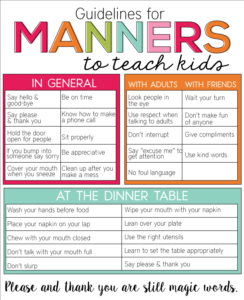
Children model their parents in every way, so make sure you use “please” and “thank you” when you talk to them. (“Thanks for that hug — it made me feel great!”) Insist on their using the words, too. After all, “good manners and gratitude overlap,” says New York City etiquette consultant Melissa Leonard, a mother of two young daughters.

  • Work gratitude into your daily conversation.

    Lately, we’ve been trying to weave appreciation for mundane things into our everyday talk — with A.J., his big sister, Mathilda, 10, and especially with our 2-year-old, Mary Elena. (“We’re so lucky to have a good cat like Sam!” “Aren’t the colors in the sunset amazing?” “I’m so happy when you listen!”) When you reinforce an idea frequently, it’s more likely to stick. One way to turn up the gratitude in your house is to pick a “thanking” part of the day. Two old-fashioned, tried-and-true ideas: Make saying what good things happened today part of the dinnertime conversation or make bedtime prayers part of your nightly routine.
  • Have kids help.

    It happens to all of us: You give your child a chore, but it’s too agonizing watching him a) take forever to clear the table or b) make a huge mess mixing the pancake batter. The temptation is always to step in and do it yourself. But the more you do for them, the less they appreciate your efforts. (Don’t you feel more empathy for people who work outside on cold days when you’ve just been out shoveling snow yourself?) By participating in simple household chores like feeding the dog or stacking dirty dishes on the counter, kids realize that all these things take effort.

  • Find a goodwill project.

    That doesn’t mean you need to drag your toddler off to a soup kitchen every week, says Lewis. Instead, figure out some way he can actively participate in helping someone else, even if it’s as simple as making cupcakes for a sick neighbor. “As you’re stirring the batter or adding sprinkles,” she says, “talk about how you’re making them for a special person, and how happy the recipient will be.”

  • Encourage generosity.

    “We frequently donate toys and clothes to less fortunate kids,” says Hulya Migliorino, of Bloomingdale, New Jersey. “When my daughters see me giving to others, it inspires them to go through their own closets and give something special to those in need, as well.”

  • Insist on thank-you notes.

    Paula Goodnight, of Maineville, Ohio, always makes her girls (Rachel, 10, Amelia, 6, and Isabella, 3) write thank-yous for gifts. “When they were toddlers, the cards were just scribbles with my own thank-you attached,” she says. “As they grew, they became drawings, then longer letters.” Younger children can even dictate the letter while you write, says Lewis. “Just the act of saying out loud why he loved the gift will make him feel more grateful,” she says.

  • Practice saying no.

    Of course kids ask for toys, video games, and candy — sometimes on an hourly basis. It’s difficult, if not impossible, to feel grateful when your every whim is granted. Saying no a lot makes saying yes that much sweeter.

  • Be patient.

    You can’t expect gratitude to develop overnight — it requires weeks, months, even years of reinforcement. But trust me, you will be rewarded. Four years after the robotic dog fiasco, I can now report that A.J. is a grateful, cheerful boy who delights in making other people happy. Sure, he asked for lots of gifts this Christmas , but he was just as excited about requesting gifts for his sisters. “They’ve both been good girls and deserve something special,” he wrote in his letter to Santa. Now I’m the one feeling grateful.

  -Originally published in American Baby magazine, November 2005.


By Charlotte Latvala



Filed Under: children's therapy

Primary Sidebar


News & Events


For the latest news, please visit us on Facebook


Parent Resources

Menu
  • Refer My Child
  • Patient Portal
  • Insurance Information
  • Patient Policies
  • Connect with Us
  • Family Testimonials

Footer

Connect With Us

Children's Therapy Connection
7209 N Shadeland Ave
Indianapolis, IN 46250
Map It
Phone (317) 288-7606
Fax (317) 288-7607
E-Mail Us
Follow Us on Facebook

Join Our Mailing List

* indicates required

Our Location

Click on the Map for directions.

Directions to Children's Therapy Connection

Children's Therapy Connection

Copyright © 2026 Children's Therapy Connection, Inc. · Design by Bloom Design Studios · Log in